
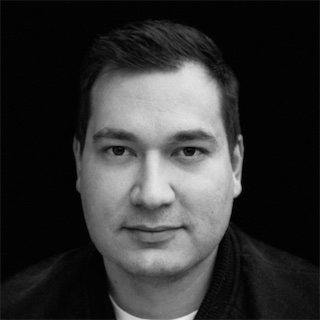
Early in his career, Stefan Petrov’s team supported customers in the United States, so their shifts ran from mid-afternoon to midnight. New in a demanding role, he would come in, sit down and not get up: seven, eight hours at the computer, junk food ordered to the desk. He went home feeling physically terrible, his eyes, he says, like a welder’s after a day at the torch. The next day, the same again.
Until he realized it was hurting his health, and it was starting to slow his thinking too. So he changed it.
That was the first time he made the choice this story is about. He has made it many times since, over 13 years at IBM, almost all of them at its Client Innovation Center in Sofia, which started taking shape in 2013. He went from support engineer to leading teams, and today his role takes in the whole Sofia center.
He also learned that you can’t make that choice for anyone else. When his own people stayed glued to their screens through lunch, he didn’t lecture them.
“Who am I to tell them, ‘Eat your lunch or you won’t grow up big and strong’? Mostly through what I did and said, I showed them the work isn’t going anywhere. It’ll be right there waiting for them.”
What a leader can do, he said, is shape the environment, so people see for themselves that it will make them feel better, and even more productive. The rest is up to them.
Wellbeing days that fade
Over the years, IBM had run plenty of one-off wellbeing initiatives: a day, a retreat, a session. Stefan saw the same pattern every time.
“Everyone’s like, wow, great, we feel amazing. Then two weeks later they’re back in real life and it’s forgotten.”
What lasts, he believes, is the opposite: small things, chosen and done every day. “Long-term success is a marathon,” he said. “It’s not a sprint.”
A program built on small choices
That is why Kat Thorne’s Positive Habits framework clicked with him. The idea is simple: one small habit can change your wellbeing and your productivity, at work and at home. “It’s pretty simple,” he said. “It’s easy to understand why it matters.”
IBM’s Sofia center turned it into Positive Habits for Performance, a wellbeing program for around 100 people. Kat brought the framework and met the team champions in person; the sessions ran on ExecuteOS, with each team’s champion bringing their colleagues together.
The format mattered to him too. “What’s unique is the platform,” he said. He had sat through enough two-day trainings “where the speaker gets up and doesn’t stop talking for two days”, dry theory that bores you even when it makes sense. This was built like a game, “really, really cool”; “anyone can join from anywhere in the world”; and people have to discuss and, in his words, “reach a consensus”, as real teams do.
But no format, he knew, could do the one thing that mattered most.
The choice
Years ago, Stefan went to a training that opened with something strange: everyone was asked to stand, hold hands with their colleagues and look at the ceiling. They did. Then the trainer asked why. Was it awkward? It was. Why did you do it, then? “You told us to.”
“Who am I to tell you what to do?”
He has never forgotten it. We are intelligent, reasonable people, he said: if something doesn’t feel right to you, you don’t have to do it. And if something is going to change, you have to want it.
That is exactly what he saw in the wellbeing program. A good format can make everyone take part: in an ExecuteOS session, everyone has to answer, and the group has to work through its differences. What no format can do is make anyone change.
“If they don’t decide for themselves, there’s no way it’ll happen.”
Those who chose
Even Stefan had to choose again. “I wasn’t skeptical,” he said. “I just didn’t believe something so small could add that much.”
His mornings used to start in bed, phone in hand: email first, then work chats, before his feet had touched the floor. He had long meant to start running, and the program was the trigger. He bought a treadmill. Now the first thing he does in the morning is run, and it lowers his stress instead of piling it on. “I swapped my phone for the treadmill,” he said, “and I feel better and I’m more effective at work.” The treadmill led to the gym, on a set weekly schedule, and he shared it with his colleagues, to show them what the program was really about.
One colleague didn’t see the point at first. Then he made his own choice: he swapped energy drinks for water. More energy, more focus, less stress, steadier emotions, at work and at home. He became one of the program’s strongest promoters; Kat sometimes invited him to share his experience, and he still talks about it today.
And one team chose together. Soon after the program, they decided, as their small habit, to go into their weekly in-person meeting without phones and laptops. The quality of the discussion, Stefan said, “didn’t go up 100%. It jumped, I don’t know, 500%.” It had bothered him for years to see people in a meeting doing other work on the side, so he “stole” the rule: his own managers’ meetings are now phone- and laptop-free too.
“Most people saw a benefit,” Stefan said, and some of the feedback he read was very personal. At the program’s halfway check in January, participants wrote about the choices they had made:
- “I have been very strict and I am not using my phone after I wake up. I do it every single day.”
- “I am taking more short breaks instead of pushing to burnout.”
- “Since I started to make 15 mins exercises, I have more energy during the day.”
- “With every new session the team members are more active and talkative.”
Those who didn’t
For others, nothing changed, and it showed from the first session. A handful wrote “no change” at the halfway check. Some decided early that the program wasn’t for them: a few very experienced colleagues saw it as something for juniors. Stefan doesn’t buy that. “There are no perfect people,” he said. It doesn’t depend on your experience or your role; it comes down to realizing that you can always take care of yourself.
One participant put it best: “The program is great, as long as you stick with it and actually do what you are supposed to :)”
People make it real
For Stefan, wellbeing is part of how the Sofia center changes, not a side project.
“People are the ones who turn transformation into reality.”
The program gave around 100 people the same sessions, the same framework and the same invitation. What made the difference was what each of them did with it: a treadmill instead of a phone, water instead of energy drinks, a meeting without laptops.
Years ago, a young manager realized that eight hours at a desk without getting up was hurting him, and changed it. Nobody made that choice for him. The organization can open the door. Each person decides whether to walk through it.
What we learned
If the choice is personal, what is left for a team and an organization? A lot, it turns out: everything around the choice. Some lessons are Stefan’s; some are ours, and they changed how ExecuteOS works today.
Make it easy to say yes
Almost all the technical problems were with microphones and cameras in the video call built into the platform, and participants said so. So we took it out. ExecuteOS sessions now run in the meeting tool each company already uses, Teams, Meet or Zoom, and the organization sends the invitations and calendar entries, so they don’t land in spam or break anyone’s calendar. Nothing should stand between a person and a choice they are ready to make.
Choose a topic that matters to them
ExecuteOS sessions are demanding: for an hour, everyone has to think, speak up and work through their differences to one answer. That only feels like time well spent when the topic matters to the people in the room. For someone to whom wellbeing isn’t a pressing question, an hour of it can feel like too much.
Champions who have made the choice themselves
Each team’s manager chose a champion to bring the team together. Not all of them were bought in, and Stefan says plainly that “we underestimated” it. People follow someone who has already chosen.
Let teams choose together
Stefan kept telling champions that a habit could be a team’s, not only a person’s, like the meeting without laptops. Few teams tried it, but those habits carry each other: a team can hold a choice that one person alone might drop.
Be there for the ones who hesitate
Kat’s presence made a difference, especially for the people who resist, the ones who say, “What am I supposed to change? I’m already perfect.” For them, Stefan believes, online alone is hard: “You need Kat there.” The sessions themselves run without a facilitator; what a person adds is different: persuading the ones who hesitate to give it a real try. Nobody can make the choice for them, but someone in the room can make it easier to consider.