

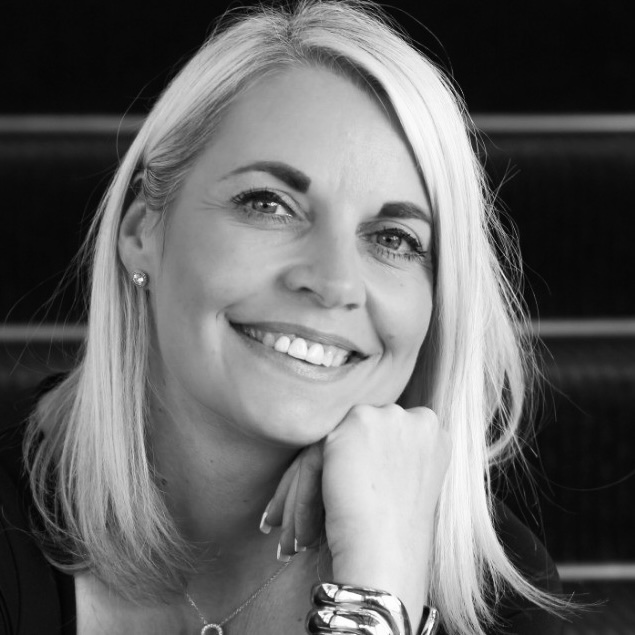
Ten years ago, at 34, Kat Thorne woke up one morning and couldn’t feel anything at all.
She had been running around the world “100 miles an hour”, climbing the career ladder, ticking off an invisible checklist of what success was supposed to look like. Her mornings started with the snooze button, then her phone, her heart racing, then an energy drink to get going. No breaks during the day; on Fridays, a lot of alcohol and a late night. Her doctor told her she was very close to a heart attack, and he was surprised she hadn’t already had one.
She lost her relationship, her home and her friends. And still:
“Even though I lost everything in that moment, it wasn’t enough to make me change.”
What changed her, in the end, was small. Years later, a partner started waking her at 5am for a jog. After three annoyed mornings she took out a notebook, opened a book her brother had given her, The Miracle Morning, and started using the time. Journaling, reading, exercise, food: every small habit she tried made her feel a little better. She realized the things she had been doing every day had been “quietly compounding”, in one direction and now in the other. And she found what she calls her mission: helping people become a better version of themselves, one small habit at a time.
That is where this story really starts: with a question every coach, consultant, L&D and HR professional meets sooner or later. You can change one person. How do you change how a whole team, a department, an organization works?
One person, then one room
Kat quit her CEO job and set up a coaching company. She would find other stressed-out executives, sell them a three-month program, “and voila”. A year later she had earned £500, a gift from a school friend who “felt really sorry” for her.
Then her old Norwegian boss called. He had seen her posts about positive habits on LinkedIn: would she give a talk at a big tech show in London? “Are you going to pay me? Because it sounds like a freebie.” He paid her what she had earned that whole year, plus her train.
The room was a hundred Norwegian school leaders, and she was terrified. She had started her career as a teacher of kids who had been excluded from school, asylum seekers and refugees, and she knew that a room only changes when it takes part. So she made the talk interactive, with anonymous live questions on everyone’s phone. One of them asked which habits were affecting them negatively. The Norwegians had had a beer or two at lunch, and one anonymous answer started growing on the screen until it was the biggest word there: “sex”. She went bright red, and her old boss called out from the audience to ask why. She got through it, and the talk worked.
Every keynote since has had two goals: raise people’s awareness, and get them to act. Its last question is always the same: what’s one thing you could start doing?
Running out of herself
It worked so well that the invitations multiplied: Norway again, then France, Sweden, other companies. Soon she was getting double and triple bookings for the same day.
“I was always going to have this limited capacity, as there’s only one of me.”
She tried everything she could to reach further. Masterclasses on single habits. A 21-day challenge after each keynote, with a follow-up call three or four weeks later. Those calls became some of her favorite moments: someone with severe back pain who had stretched for ten minutes before bed and was finally sleeping; couples who had been close to splitting up, rebuilding their relationship after changing their phone habits; families eating around the table together for the first time.
But she could see where it ended. “They’ll do their habit of 21 days, then they’ll forget about it, and then there’ll be another wellbeing initiative.”
Beyond the individual
So she went deeper into organizations. She built a community of “positive habit champions” to carry the work between her visits. It took a year, and it ran into exactly what any internal program runs into: internal politics, and clashing tech and systems. Changing individuals, even many of them, wasn’t changing how the organization worked.
The other lesson came from the top. Ask a senior leader what matters most, and you may not get the CEO’s answer. One, hiring her for an event in a group of care homes, said the number one priority was resilience. Would the CEO agree? No: the CEO wanted every home accredited, and only 7 of the 21 were. Without the leadership team aligned on the goal, everything downstream pulls in different directions. And leadership teams rarely give anyone a whole day, so she learned to start with 60 or 90 minutes, earn their buy-in, and build from there.
What she was missing was the bridge between the two: a way to reach everyone else, the whole system below the leadership team, without her having to be in every room.
Taking herself out of the room
For years, she had resisted technology for exactly that.
“Until this point, I had really resisted using tech, because I didn’t think that I was replaceable in that sense.”
She thought people would only value her if she was live in front of them. And the platforms she saw didn’t help: “flat e-learning”, as she calls it, where people pay and never use it. For someone for whom this is “a mission first”, that didn’t sit right.
Then, at the Future of Work event in Sofia, she met ExecuteOS. A time and a place where a team meets; video or in person; no facilitator needed, “although you can facilitate it”; and a rich range of activities that people do together. She saw a way to carry her philosophy, her expertise and her method to many teams at once, and still join some of the sessions live. Someone had once asked her a question she couldn’t shake: what disservice are you doing to the teams you work with now, and the ones who want to work with you, by not having a more scalable approach?
“I almost had to remove myself from the equation.”
In their own words
Running it with teams in different organizations, from IBM to insurance and banking, taught her one more thing. Positive habits interested people, but in her words, not theirs. A support engineer, a warehouse manager, a CFO each asked the same question: how does this relate to my role? So the content now speaks each organization’s own language, built for the people in it. “Making it personal is huge,” she said. In a world where we don’t know what’s real anymore, people need to see things that feel familiar to them.
That also changed how she talks to the people who hire her. Wellbeing as a word has worn thin.
“They’re fed up of wellbeing being done to them.”
People invest in it, she tells them, when they can see it isn’t a one-off. So her work now has a shape: a keynote or masterclass that wakes the room up; a leadership alignment workshop, so the leaders agree on what matters; and then an academy on ExecuteOS, where every team works through it together, in its own language, long after she has left the room.
You can’t unknow it
Ten years after the morning she couldn’t feel anything, Kat still describes what she does as waking people up. “Once you know this stuff, you can’t unknow it,” she said. Ask people what one habit could change and they already know: more energy, better sleep, being a better parent, less anxiety.
“We already have the knowledge,” she said. “We just don’t do the things.”
She learned that the hard way. Knowing wasn’t enough for her, even after losing everything. What changed her was a small habit, practiced every day. What changes an organization, she found, is the same thing at scale: not one more inspiring day, but a place where people come back, together, and do the work.
What we learned
Kat works with organizations from the outside, but the same walls stand in front of anyone trying to change how a team or an organization works from the inside: an L&D or HR team, a transformation lead, a manager. What her journey shows:
You are the bottleneck
Whatever works because you are in the room stops where your calendar stops. Double and triple bookings were Kat’s signal. Inside an organization, it is the one trainer every team asks for. Design the work so it carries on when you aren’t there.
One-offs fade
A keynote raises awareness; a 21-day challenge gets people started. Without somewhere to come back to, people “forget about it, and then there’ll be another wellbeing initiative”. Change needs continuity: a time and a place where teams return to it, together.
Start with the leaders, then reach the whole system
Leaders often disagree on what matters most without knowing it, like the resilience that the CEO would have called accreditation. Align them first, in the 60 or 90 minutes they will give. Then reach everyone else: the teams and departments where the work actually changes.
Speak their language
Content that doesn’t look like their organization raises the question “how does this relate to my role?”. Build it in their words, for their roles, and people recognize their own work in it.
Don’t do it to them
People are tired of initiatives done to them. Make it something they do together and own, and show from the start that it isn’t a one-off.